 | ||
| New Whig is being read, and mostly agreed with. |
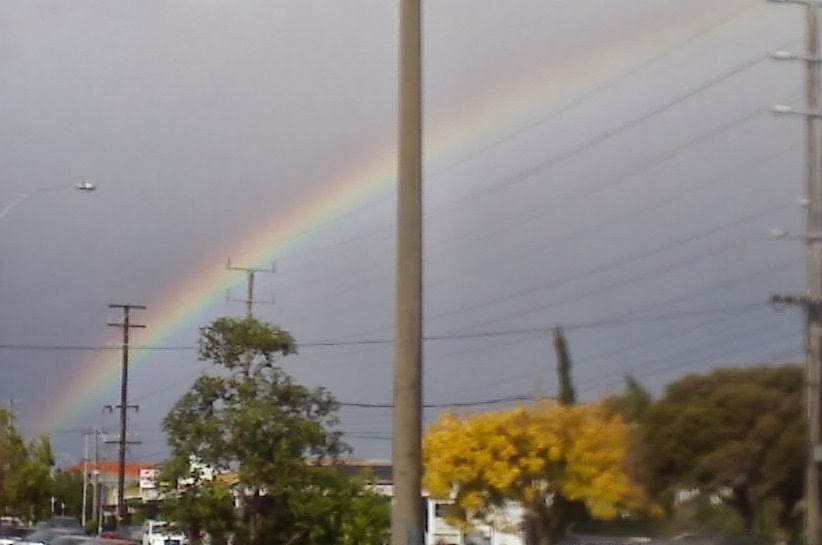
Rainbow over the minicipality
Showing posts with label optimism. Show all posts
Showing posts with label optimism. Show all posts
Thursday, 13 April 2017

Monday, 2 January 2017
1017
Scene One is in a small cottage. A few people are celebrating as a young
couple have just announced they are to have a baby, and he is going to clear a
plot of land that was never used and make a small farm for them, if they have
the blessing of the village, because it is away from the Common and the
Churchland, on the other side of the village, but still belongs to
everyone. People recall going there as
children as a ‘dare’, and others have hunted there occasionally, but no one
ever lived there.
It is a small house, so we hear a lot of people outside who
have come to congratulate the couple and agree to the land clearing. Then along comes the local big wig, whom we
also just hear outside that he too has come to give his blessings and agree to
the land clearing, but then he tells how he heard when a small boy that there
used to be someone living there who put a curse on it, which is what the
children sometimes tell each other, and that is why his family always left it,
because really it is theirs, even though the village thinks it belongs to them,
like their common land in the middle of the village. If this were an Opera, he would come on stage
and sing this as an aria, but the aim here is to have a play with few actors
but many characters.
The lower half of the stage has a black curtain across in
front of it as the only light comes in from the window in the right, and to
start that is little, but then bright lights are brought up to the window so
they shine into the top part of the room.
Perhaps to start the room could be full of light, quickly fading into
night as lamps and candles are lit on the floor, and the curtains could be
lowered from above, and then when the lamps are raised and put up on shelves,
the curtains could drop to the lower half of the stage, and then the setting
sun could shine in the window, on the happy celebration till the sun sets and
all is dark. Then, in come children, who
we hear but do not see as they are in the dark, below the light from the
candles, which are high. They share the
good news and make plans for their studies with the teacher.
He tells of the new age they live in, where they need not
believe old superstitions, and praises their ‘modern times’ and their expanding
knowledge etc. Perhaps a Priest or
someone in the robes of some order with a cowl over their face agrees that ancient
superstitions must be dropped but disagrees over the reason, not a secular
modernism, recently learnt from the rediscovered Ancient Greeks, but faith in
the beliefs of the Church.
Bright lights come up to the window and then in come
Government Soldiers, who read a proclamation announcing all men between some
ages are conscripted into the Army. The
new, young, father-to-be is grabbed and led away, with barely time for a
parting kiss, being told, ‘you wont need to take anything where you are going.’ We hear others also being arrested outside,
and cries of ‘What about the harvest?’ and ‘My baby!’ And suddenly there are only women on stage
and a boy who is too short for us to see.
The soldier looks down at him and then takes a bugle out of
his bag and holds it up. ‘Do you know
what this is?’ ‘Could you play it?’
There are cries of ‘No!’ But then the soldier holds up a coin and the is tempted.
The soldier says, ‘Put your lips together and put the bugle to your lips. Keep your lips loose but keep the the bugle
tight, and blow.’ He does and is grabbed
and led away, ‘To blow the bugle’. And that is the end of him till the end of
the play.
Suddenly it is quiet again and dark outside. ‘My baby!’
‘No, my baby!’ ‘They are all our
babies!’ ‘Shall we ever see them again?’
‘What about the harvest?’ ‘We won’t need the extra field now.’
‘Ah, that field. It is a good thing we are not disturbing that place, even if
it was only good for scaring children.’ ‘The
curse is real enough.’ ‘This might be a new age but we are foolish to abandon
our old traditions.’ ‘You wouldn’t say these things if the Priest is around.’
Thursday, 27 October 2016
The Southern Hemisphere
The Southern Hemisphere is not something we think of as a 'thing'. It is more a location, and being spherical in shape is very difficult to contemplate in its entirity, especially when we are used to maps that are based on the Northern Hemisphere.
The world can be thought of with the South Pole at the top, or rather, tilted as is the axis of the world. Then the world rotates clockwise, which is the natural way most things in Nature revolve. It is the Northern Hemisphere that is on the bottom of the world. We can imagine a spinning globe of a planet with a solid crust on the top. As it spins, some of this crust breaks away and flows down the spinning ball. Plate Techtonics is the crust of our world that is slowly sliding 'down', that is from South to North, in some great 'gravitational field' that is beyond our conception.
Australia should position ourselves as leaders of the Southern Continents, and help South America and Africa develop and progress. To a great extent, weather systems are distinct in the two hemispheres, for example, a Neuclear War in the North might not be fatal in the South, and other forms of social and economic systems could eaually be isolated.
We are generally thinking of China and India being the two great Northern Powerhouses that will overtake Europe and North America and with them locate nearly all Economic activity in the Northern Hemisphere. However, eventually Africa and South America should rise. Australia, Oceania, South East Asia as well as Africa and South America together, as a United Southern Hemisphere, could rival the North. This could take a Century, by which time Antarctica will be populated with resettled refugees, amongst others.
In two hundred years, the World Capital could be in a magnificent ice-palace at the Southern Pole.
Another reason why Australia should lead the Southern Hemisphere, and hence the world is that we have the oldest coninuous cultures amongst all human peoples. The Australian Aboriginal Dances are memories of the way the world began. It would be tragic if these memories were forgotten, but they appear (at the start of the 3rd millenium since the start of the Roman Empire) to be strengthening and spreading.
The world can be thought of with the South Pole at the top, or rather, tilted as is the axis of the world. Then the world rotates clockwise, which is the natural way most things in Nature revolve. It is the Northern Hemisphere that is on the bottom of the world. We can imagine a spinning globe of a planet with a solid crust on the top. As it spins, some of this crust breaks away and flows down the spinning ball. Plate Techtonics is the crust of our world that is slowly sliding 'down', that is from South to North, in some great 'gravitational field' that is beyond our conception.
Australia should position ourselves as leaders of the Southern Continents, and help South America and Africa develop and progress. To a great extent, weather systems are distinct in the two hemispheres, for example, a Neuclear War in the North might not be fatal in the South, and other forms of social and economic systems could eaually be isolated.
We are generally thinking of China and India being the two great Northern Powerhouses that will overtake Europe and North America and with them locate nearly all Economic activity in the Northern Hemisphere. However, eventually Africa and South America should rise. Australia, Oceania, South East Asia as well as Africa and South America together, as a United Southern Hemisphere, could rival the North. This could take a Century, by which time Antarctica will be populated with resettled refugees, amongst others.
In two hundred years, the World Capital could be in a magnificent ice-palace at the Southern Pole.
Another reason why Australia should lead the Southern Hemisphere, and hence the world is that we have the oldest coninuous cultures amongst all human peoples. The Australian Aboriginal Dances are memories of the way the world began. It would be tragic if these memories were forgotten, but they appear (at the start of the 3rd millenium since the start of the Roman Empire) to be strengthening and spreading.
Saturday, 24 September 2016
What a wonderful week!
What a wonderful week!
I cannot remember what I did last Sunday, stayed home and
not much, I suspect. But Monday we went
to the Show, Billy, Edward, Scot and me.
I had not a twinge of pain anywhere, the first time ever at the show
like that. I bought a Cupie Doll after all this time, but when they got Toffee
Apples I did not, because Sixty Five years ago, or whenever, when I was perhaps
six, I went with the cousins to the Show and they got toffee apples and I
wanted one, but could not eat it and dropped it in a pavilion. I recall the counters were above eye level,
so I must have been small and young, perhaps only four or five. Was that the same Show where I asked about
the Cupie Doll and was told: no. some years I went with Mother, and we saw the
Dressage, and some years with Father and we saw Red Indians one year and motor
cycles another. I think the Red Indians
were genuine and were something special, though I didn’t know how special and
rare in Australia they were, perhaps never again, but Father knew as he had
lived in Canada. None of them would go
on a ride with me, but Billy and I did go through a scary walk-through that
genuinely terrified me and had me screaming – I loved it. He couldn’t get into it as much, just
watching the performances, but I am practived at suspending dis-belief.
Tuesday? How could I
already forget? Must have gone to the
office, but think I left early. Then
what?
Wednesday, I met up with Barbara and had a really good day. It seems so long ago, and is merging into the
single memory of the multiplicity of visits, though each one is slightly
different, Thursday was the Office, and
then changing for the Opera and meeting the Lawyers first. It was another hectic day in the office, but
I cannot recall what now.
Friday was the fourth appearance in the Federal Court and we
won. Then another good play Friday and
here I am.
Wednesday, 24 August 2016
the Melbourne Grand Prix
Opposition to the Melbourne Grand Prix is a bourgeois plot
to denigrate a Working Class sport. The
emphasis on the overuse of a public park for an event with limited class appeal
appears to support the rights of ordinary people – class unspecified, and also
has an environmental aspect that immediately co-joins this issue with the social
groups and ideas that are called ‘the left’.
It might be argued against this idea by pointing out the
elitist domination of the Grand Prix by ‘big, international money’ and the
exclusive use of some of its facilities by that small group, and then noting
that these people are reviled by opponents of the Grand Prix. The very small, very wealthy, global elite,
the five percent of the population that owns ninety five percent of everything,
a ratio that has remained similar throughout human history since Classical times
and probably before, are the contemporary version of an Aristocricy, while the
Middle Class and Working Class might be approximately be assumed to be forty
percent each with a five percent ‘under class’.
Before the French Revolution there were moves to align the
peasantry with the aristocracy against the middle class who were the leaders of
the revolution. Still today, most of our
Greens, Socialists and so forth on the ‘left’ are the well-educated children of
the old middle class. Working Class
suburbs are always more conservative, for example supporting the Monarchy. Socialist Governments are mostly run by a middle
class sub-class of the highly educated, supposedly on behalf of the Working
Class who are assumed to be unable to govern themselves without being led by
theorists and activists.
After the Russian Revolution’s blatant social failures emerged
after the first world war, the German left agreed to work with the old upper
class for the sake of social stability.
It led to later problems but this is not the place for detailed history
of the different class groupings though history. These two classes share other aspects because
they are the two original classes before the rise of the middle class. They are both ‘earthy’ in the sense of
swearing and carnal relationships compared to the middle class’s puritan
approach to both. They are also both
public compared to the highly prized privacy of the middle class, because the
working class live in crowded, public conditions and the upper class live
overt, public lives as exhibitionists, though now days only in private. It is little wonder that Motor Racing should
appeal to the extremes of the Social Ladder: Gasoline Alley and the many motor
racing princes. While the Working Class are powerless to end the negativity towards their sport, the other end of the social spectrum are probably amused that the trendy, bourgeois activists oppose them and laugh at ignorant denigration.
Instead of opposition, the aim should be to take maximum
advantage of the Grand Prix. For example,
the much derided pit buildings and temporary facilities for the international,
high-paying visitors could be year-round facilities for park users. Indeed, the effort to preserve the park for
public use really only helps a small number of park users, compared to similar
areas in other places, and a further criticism could be that if the park is to
be saved for anything it is to revive ‘Country’.
A further suggestion will be ridiculed by those who now
oppose the Grand Prix, and that is to make it the Royal Melbourne Grand
Prix. There is a valid criticism that
internationally few people know it is the Melbourne Grand Prix and not the
Australian Grand Prix, so the City does not earn all the global publicity for
which it pays dearly. Making it the
Royal Melbourne Grand Prix would ensure the name was clear and unambiguous, as
well as unique. The way to make the
event truly Royal would be to start it with a carriage race. After all, motor vehicles derive from the
horse-drawn vehicles.
HRH the Duke of
Edinburgh helped develop carriage racing as a competitive sport and raced
himself until recently. An approach to
be patron of such a new vehicle racing sport in conjunction with motor racing
might appeal to His Royal Highness. How
horses galloping down the circuit would affect the road surface might be a
consideration of the sort that bursts bubbles.
It would be interesting to make this a truly Working Class
festival, unabashedly so. With interests
and advertising that appeal to Working Class people that derive from their own
interests and activities, not alcohol and so forth sold to working class people
by big middle class companies. For
example, the Churches could be sponsors, because there is nothing ‘sinful’
about cars and working on them is good, honest ‘work’. The end of greyhound racing
in NSW is similar, with issues over the well-being of the dogs the excuse to
terminate a largely working class sport.
There is an ironic inconsistency in people who eat meat without thinking
about the conditions of the lives or deaths of their food but stress over the
deaths of dogs, and it is even more inconsistent with a world where millions of
people are suffering more than the dogs, including some in Australia: the dogs
can only be an excuse.
If we are to have the Grand Prix, it should pay for
itself. Being able to include it in our
list of International Sporting Fixtures, to support our claim to be World
Sporting Capital, comes at a great cost.
Melbourne remains a car city; while over eighty percent of private
journeys in London are on Public Transport, it is less than twenty percent in
Melbourne (ref mislaid). We can’t extend
the trams and trains significantly, but we could replace half the cars on the
road with buses. Non-polluting buses
that use fuel cells as in many other countries could be built here to replace
our now defunct car manufacturing industries, but for some reason we spend more
on roads for cars. We sure do love our
cars!
Subscribe to:
Posts (Atom)