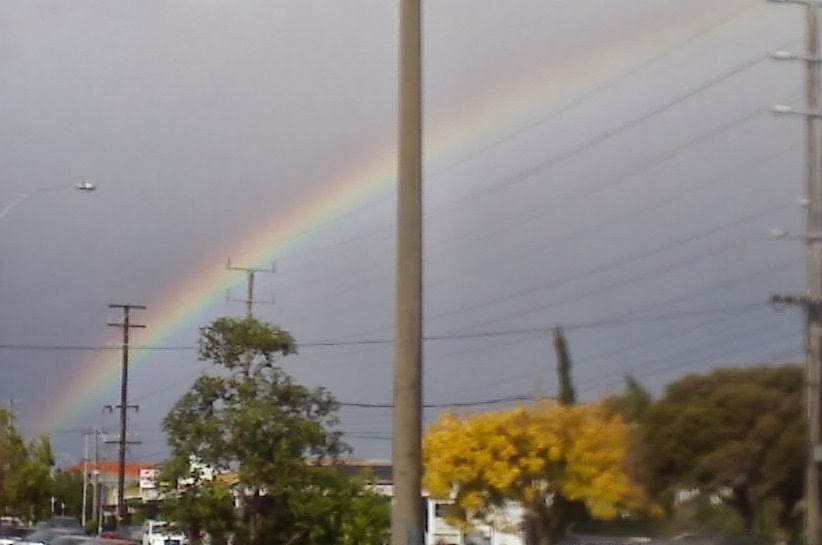
Rainbow over the minicipality

Rainbow over the minicipality

Monday, 7 September 2015

Public Transport in Victoria


Public Transport in Victoria should be totally re-organised.  The current strikes of trams and trains reveal the out-dated state of this vital service.  The Australian Colonies had no history of change, but had institutions set up from afar which were assumed to be permanent and inviolate.  We persist with these dinosaurs of public activity.
The practice of decisions over people’s lives being made by others is Feudal.  That “managers” still decide issues of rostering, hours, training and so on, without discussion with the “workers” themselves is counter to the egalitarian principles crucial to Australia.  These disputes are not about the details of the claim, but about the power of wage-earners over their own lives.  It is a classic example of Marxist ‘alienation’.  Instead of the Green-Left and  the Red Left  preaching against “capitalism” they should direct their energies towards systems like Public Transport, but also Health and Education, where these feudal divisions into classes persists and holds back the modernisation and efficient operation of these systems.
Of all countries, Australian society is strongest in our belief in equality.  This may have been sourced in the Aboriginal Cultures that were more influential in many aspects of the Australian character than have so far been acknowledged.  The Australian Army has been noted for the relationship between Officers and Personnel that was different from the Aristocratic traditions that persisted in most Armies into last century, and still survives. 
In the private, corporate world, the problem is not the Economic structure of Free Enterprise but the persistence of the artificial class divisions into managers and workers.  This vaguely corresponds to the academic an Associative division of occupations into Professions and Trades.   This same distinction has persisted in Government and semi-Government bureaucracies and throughout the Public Service including the privatised parts of it.  This shows that the problem is Social and endemic and not the consequence of the Political structures called Capitalism.  It is because it survives in areas like Public Transport that we have the problems leading to these strikes.  Nationalising all industry, the aim of the Left, would result in everything being run like Public Transport.
If ever “Worker Control” was applicable, it is surely in the Government owned, if no longer Government run, systems like Public Transport.  Whether it is through the existing Unions or via new forms of Corporate Governance, we need to bring the people who do the work into the decisions about the work.  The same holds for the important but maligned Professions of Teaching and Nursing.   
The shake-up needs to go much further than employee-relations.  The balance between public and private transport also need to be addressed.  Australia cannot remain a car-based society for ever.  In cities on other continents, most private journeys are by public transport, but in Melbourne, probably the worst of the Australian Capital Cities, it is less than a quarter.  This can only be changed with a clear lead from Government.  Except that Spring Street is stuck in the Colonial past.  While small improvements to the train and tram network are important, including eventually removing all the suburban level crossings, they will only make a slight difference. 
Busses are the obvious solution.  Not just greater frequency on existing routes, but creating a network of new bus routes that can replace at least half of the cars that choke our roads and clog our freeways.  It would be a major manufacturing industry.  It would also replace the petrol motors of cars with the non-polluting fuel cells of modern busses.   This should all be done by an Authority that includes the people who will make and operate the busses.   Having just installed the outrageously expensive Miki system in Melbourne, it would need to stay till it has recouped its investment,  perhaps a decade, but then, as should have happened before, Public Transport should be made free.  The costs of selling tickets exceed the revenue.  The public subsidy for public transport would be less if it were free, per capita use, though usage would greatly increase, and free transport is a good incentive for people to switch from driving their own car to going by bus, tram or train. 
Foolishly, many of these same people that persist with the colonial bureaucracies want a Republic.  They naively thing such a symbolic change will have a top-down effect and correct all our social ills.  This is obviously absurd, but they presumably know it because they usually preach a minimalist change to a republic, pretending such a transformation were possible, and ignoring the unforeseen but certain major ramifications that would follow removing the Crown from the Constitution.

Sunday, 6 September 2015

just angry tody

Listening to ABC radio leads to distress.  Not a good lie-in at all.  Firstly about stolen Aboriginal wages in WA.  Millions stolen, eventual recognition of the problem and a slow process of correcting it, except that the final outcome is a minimal token to the few people who have survived the drawn out recognition of their rights.  The way Aboriginal people were treated is horrific.  It still persists, and worse, many Australians retain the mentality of approval or denial of this horror.  If Tony Abbott thinks Daesh is equivalent to the Jewish Holocaust, then he should look at the continual official treatment of Australia's first nations and the descendants of the long-term owners of this country.

Then came an interview about "drugs".  Portugal legalised all drugs fifteen years ago and since then heroin use has halved, AIDS transmission ceased, all drug use fell, and so forth.  The writer of a new book is speaking in Australia.  The arguments are so persuasive, yet the situation remains in Australia.

No wonder I feel resentment when in the presence of Medicos or Lawyers, the people who should be leading our society but instead are holding it back.  Pace "doctors' wives" the supposed majority component of the "new left" including the Greens and the Socialist Left, whose policies are as extreme, unrealistic and counter-productive as the Right.

I should be posting this publicly, but who listens to me?  I just make enemies, draw attention from undesirables and attract interest from the private, secretive "public" authorities.

I wrote something about public transport, yesterday, that I haven't yet posted to New Whig, that I am thinking of promoting, but my thoughts continue to be about the Nature Strip, and I might write something about that and promote it widely.  If I am to bring about one change in my lifetime, what little is left, then stopping the poisoning of endemic wild-flowers and mowing grasslands, all part of the recognition of Country, will be eternally worthwhile.

Yesterday I felt terrible.  Lunch went really well, but when I returned to Billy's later, I made us canned soup and ended up on his couch, almost asleep and went home early. The problem was partly his choice of programmes.  the Lilly Tomlin sitcom with Riba Macantyer (sp?), Malibu Country, was entertaining to start with, except now it is a total bore, except that the Lilly Tomlin character smokes weed and campaigns for it in the show.  That is good to see.  Marijuana is openly praised on television and normalised into family life in sitcoms.  On the MTV Video Awards show, they did a "3,2,1, Marijuana" cheer and gave their top award to a user and campaigner for drug normalisation.  Today, however, I don't feel too terrible, and will go to the city first for lunch and then tram to St Kilda to see Bad Jews at the new Alex Theatre.

The 

Tuesday, 25 August 2015

New Play


New Play
About a guy, based on me, married to a woman based on Billy.  She is not on stage at the start but makes an entrance half way through the first act.
He is a moderately successful architect.  Part of the action is his arguments with bureaucrats about a development or extension or something.
Anyway, the wife is an addict.  Notes to the script can suggest that the production make her an addict to what ever is plausible at the time.  I don’t want to lock in a drug.  Perhaps after drugs are legalised and normalised, there will be something of an equivalent.
Anyway, a visit from her supplier occurs in each act.  There is discussion on the virtues of the illegality. 
Perhaps I can make it a vehicle for my Melba Opera House idea.  There should also be a mother in law.  Clearly there is tension between He and Her’s family.  She can be from an aristocratic, Toorak family, old money, with the proceeds of selling the ancestral homestead and property, dating back to Selectors.  No problem knowing who she is based on.
It is a Melbourne play, about identifying with Country.  It is also about retributive justice and using the Law to punish people.  Everyone has secrets.  She about the drugs from her mother.  We later learn the Dealer has imunity and can keep dealing because he feeds information about his clients. It is why He misses out on some contract or tender, or prize.
She may in fact be of aboriginal descent.  Many old families hushed up such a thing long ago.  Opens the debate into what it means to be Australian.
Ok, so the Architectural competition behind the play is for an Opera House for Melbourne.  The winner is a foreign conglomerate design in Port Philip Bay, with a Racing Circuit round it and hotels and wealthy apartments.  Not a people’s place.
There had better be a Grand Daughter, so we have the three phases of womanhood.  Perhaps she can act as a kind of “chorus”.  She might break the fourth wall.  She ruminates on her life and family as if they were a play she was watching or caught up in.  The unreality of it.  When she is left alone with the Dealer for some reason, they can have a big argument.  Good place to put Economic ideas. He would be New Capitalist, she New Anarchist.  

scrap of dialogue


D: You only want to win because you think you can get a knighthood, now. 
H: That is ridiculous.  It is an important competition that I am entering to have my vision for Melbourne built.  I don’t care about the recognition, though I admit that would be nice.  And I am not after a knighthood. 
D: You were very supportive of the idea when it was reintroduced, when everyone else in Australia was ridiculing. 
Perhaps the four scenes can be each week, on the same day.  The play could be called “Tuesday”.  Or else the day could be what ever day the actual performance was on.  I like the idea of changing a performance, perhaps making it time relevant.  Time is cyclical.  This play is cyclical.  Not the same day repeated, like Groundhog Day, or many others, but life repeating another, new day’s, similar activities in similar order.
H: If Aus had become a Republic we would not be having this question.
D: Well, I like the Queen and all the Royal Family.  Why do you want to get rid of them?  They aren’t doing any harm, don’t cost much, what ever you say, and some people say they provide stability to our constitution, and without it we would lose our connection to a thousand years of constitutional development and all that tradition, and become just another new, young republic, whose government is open to any faction that gains power through whatever means.
H: Of course the Royals would be welcome to visit, and you can take just as much interst in them whether they are our Monarch or not.
D: But that is silly.  They are only celebrities because they actually are real royalty.  The world has dozens of deposed monarchs and other nobility, and no one ever hears about them.
H: Don’t be so sure.  The Surbian Royal Family is back in their Palace and filling many of the social activities of their ancestors, like marking important national days, without any political power.  He calls himself “Crown Prince” and is just waiting for his coronation. 
D: That just shows how relevant the Crown is to the Constitution.


Her’s speech, Act 2?

You have no idea what it was like growing up in my family.  The expectations were intense. Failure was ignored after praise for being a good loser.  But no help!  Oh, no! We were expected to do it all by ourselves. 
I saw siblings and cousins receive heaps of praise for their achievements, their ambitions, but anything I did was regarded as trivial.  Worse, any time I did manage to start something by myself, suddenly “he” would destroy everything I had started to do, just so “he” could help me start.  I remember starting to climb a ladder as a toddler, and making it up a few rungs before he saw me and came running.  Instead of praising me for being able to do it, which Marcia, my therapist says a normal father would do, he grabbed me and pulled me off the ladder, put me down on my knees, although I had stopped crawling by then, and grabbed a hand and said he would teach me how to climb ladders.  I just burst into tears, so “he” yelled something at me and walked off.
I felt I was lost in a dark forest, like in my story books, but I didn’t know there was a way out, didn’t know I should try and get out, and no indication of which way to go, anyway.
Perhaps there will be four scenes, two in the first Act.  In each “Dealer” comes in, has conversation with daughter and father separately, perhaps one each time, then “her” comes in, but takes whatever it is out of room.  I don’t want any jeckle/hyde transformations happening on stage.  No demonstration of paraphernalia, or methods of administering.  Anyway, she returns a different person, more “real”, honest, perceptive, etc.  Defensive, vulnerable sad.  Aggressive and in control. Perhaps differently each of the four times. 
The fourth time, she comes back very “natural” and life of the party and efficient, as if she had worked through her other problems, but still obviously with the dependency, but that is now seen as harmless, though costly, and indeed beneficial if kept in control.  This in contrast to “Him”s demise, because this is a tragedy, with the tragic floor of goodness.


New Story, perhaps a play. 

A  group of year twelve people.  When they were sixteen they became sexually active and all screwed around a lot including with each other, and now are bored with sex and certainly don’t want to do it with each other.  The Education System has been made very easy for intelligent children to coast through, with good results made easy, or else their futures are mapped out for them through family obligations or connections or social limitations.  Essentially, they are bored.
They decide to commit the perfect murder.  So the play becomes a debate about the morality of death.  They expect their success will come from the unexpectedness.  It must obviously be a murder, but one that is mysterious and inexplicable.  It has to be someone distant from everyone and they consider a random person, but then decide to ensure the person has no connection to any of them, and to their astonishment , everyone in the whole city has some remote, but not insignificant connection to someone in the group.